

Contemporary Wood Burners
Wood stoves may look similar from the outside however a closer look will reveal important improvements that increase efficiency and clean-air emissions. This is a great news for homeowners.
Traditional open fires release carcinogenic particulate matter into the air. By switching to an Ecodesign and Defra exempt wood stove, you can eliminate these harmful particles altogether.
Futura
The Stovax Futura 5 woodburning and multifuel stove is an Eco-design Plus ready, DEFRA exempt for Smoke Control Areas stove. It has a large viewing window as well as a elegant stainless steel air controls. This modern design is ideal for traditional and modern homes as well. It also features a state-of-the-art convector heating system that incorporates heat shields to maximise the amount of heat that is directed back into the room as well as a low distance to combustibles for optimum efficiency.
The name Futura is a reference to its geometric sans serif designs low contrast and even width strokes. The font was created by Paul Renner, and first released commercially in 1927. It was an immediate success and soon found its way into newspapers, magazines and books, as well as on posters and logos of many major corporations.
Like all fonts, Futura has evolved over the years as typographic styles have changed. The spacing and shapes of the letters have changed over time, but the overall aesthetic remains constant. The font was also modified to suit different languages. The addition of the Latin alphabet made this font more versatile. Since then, numerous type foundries have revised and updated the design.
Futura is a font that has been inspired by the Art Deco style. Futura's clean lines and simple lines make it easy to read. Its retro-futuristic design is evident by its appearance in 2001: A Space Odyssey and the inscription placed on the moon by the Apollo 11 astronauts.
Its legibility and simplicity lent itself to advertising, as well as editorial design. Its use in these two fields has contributed to its popularity. Since its launch it has grown to become one of the most popular fonts ever created. Its popularity inspired other designers to develop fonts similar to it, and in the present it is still one of the world's most widely used fonts.
The font's geometric shapes and clean lines led to a generation of artists. Feminist artists such as Jenny Holzer and the Guerilla Girls took it into their work as well as Shepard Fairey has also used it in his artwork. In the 1960s and 1970s, it was the font of choice for art of political protest, as it was seen as a symbol of progress and modernism.
In the 1980s, typographers started to utilize Futura to do digital typesetting and phototypesetting. Because of this, the letters of Futura became distorted and disjointed in certain instances. It was also typical for typesetting to change the shape of a letter, or to alter its size. This could lead to a variety of mistakes and distortions that were often difficult to rectify. This was particularly relevant when adding ligatures which required precise adjustments to the heights of particular characters.
Vogue
When Madonna sings, "Come on, vogue, let your body move to the beat" she isn't only promoting her hit single but also a form of dance that has become part of pop culture. Voguing is a form of expression for a lot of people. Others use it to defy the norms of society and empower marginalized communities. Voguing is deeply entwined with subcultures as well as fashion and music. It has gotten its inspiration from dance and beauty movements around the world.
Vogue, since its first issue in 1892, has been at the forefront of fashion. It has grown into a global authority in groundbreaking image-making and journalism and discovering new talents. The magazine's coverage is based on diversity and inclusion and is an iconic brand in the fashion industry. Vogue is now a multiplatform magazine that views the world from the perspective of fashion.
Vogue is published by Conde Nast and covers style news in the areas of high-end fashion beauty, culture, and living. The current international editors-in-chief are American Vogue's Anna Wintour, Emmanuelle Alt (French Vogue), Franca Sozzani (Italian Vogue), Alexandra Shulman (British Vogue) and Aliona Doletskaya (Russian Vogue). The company also publishes Teen Vogue in the United States and a version targeted at teenage girls. understanding and Australia both publish Vogue magazines. Vogue Patterns is a line of sewing patterns for women that is owned by the company.
In 1892, the magazine was initially a focus on fashion for high society and the ceremonial side of life. It then became an aperiodical newspaper and it was a monthly publication until it became an annual in 1909. Conde Nast bought the magazine in 1916, and transformed it into a fashion bible for women.
The Vogue of today is aware of its place in the world and keeps its readers interested with articles that discuss the current political climate and social issues that are of interest to readers. For instance, British Vogue included NHS workers on its cover during the pandemic of 2022.
Yale digital humanists and researchers are diving into Vogue's rich electronic record using a program dubbed Bookworm, which is similar to Google Ngrams. It analyzes the use of words such as "frock" and "dress" in the magazine over time and under different editors. The results help researchers track the ways in which the cultural norms and concepts have changed with the changing use of vocabulary.
Studio
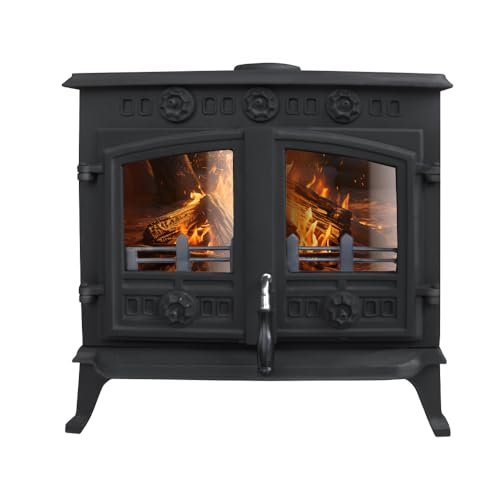
Stovax Studio stoves are freestanding models that can provide the same performance of inset wood-burning fires however in a stand-alone style. This stunning range comes with widescreen flames that can be complemented with a range of frames and styling options for a contemporary living room statement. All models feature Stovax's highly-technologically advanced Cleanburn combustion system, which directs three types of air to the glass fronted fireplace. This ensures superior heating efficiency, superior flame control, and widescreen views of flames.
The Studio Air 1 freestanding woodburning stove is available hearth mounted or installed on a Studio Bench and the Studio Air 2 offers a separate air kit that can be used to reduce minimum distances to combustibles that can be used in Smoke Control Areas. Both models can be combined with various heat shields that are highly efficient to decrease clearance requirements and make an impressive style statement.